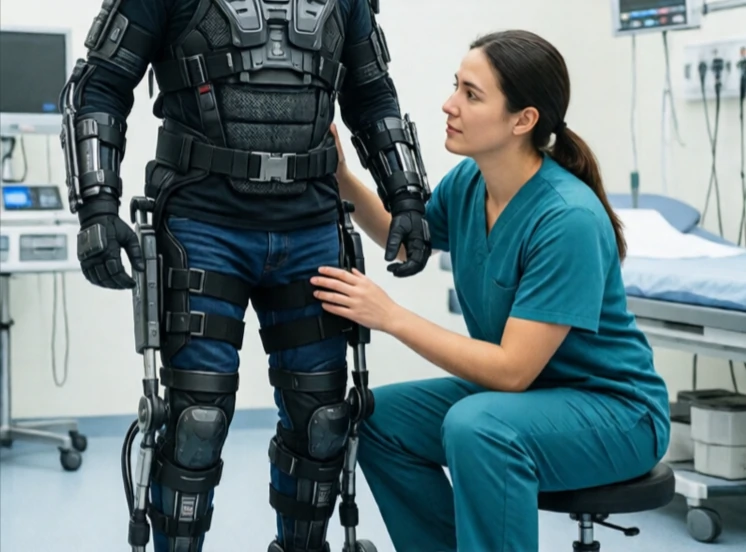
An exoskeleton is a wearable robotic frame that enhances human strength or mobility. It straps to the body and provides powered assistance at the joints. Some help factory workers lift heavy parts. Others help people with spinal cord injuries walk. The same technology serves both industrial and medical goals.
Early exoskeletons were bulky and tethered. Modern versions use lightweight carbon fiber, brushless motors, and lithium batteries. The ReWalk and Ekso Bionics systems let paraplegic users stand and walk. Industrial exoskeletons from companies like Hilti and Ottobock reduce strain on workers who lift and reach overhead all day.
Exoskeleton categories
- Passive: springs and counterweights, no power.
- Active: motors and batteries, powered assistance.
- Upper body: shoulders, arms, back support.
- Lower body: hips, knees, ankles, walking aid.
- Full body: integrated suit, research and military.
The challenge is comfort and intent detection. The exoskeleton must know when the user wants to move and how much help to give. Too little assistance and it is useless. Too much and it fights the user. Sensors at the joints and pressure sensors in the footbed help. So does machine learning that adapts to the individual's gait. Exoskeletons are not yet as common as science fiction promised, but they are finding real niches in rehabilitation, logistics, and construction. The technology works. The remaining problems are weight, cost, and battery life.
Comments
No comments yet. Be the first to share a thought.
Leave a comment