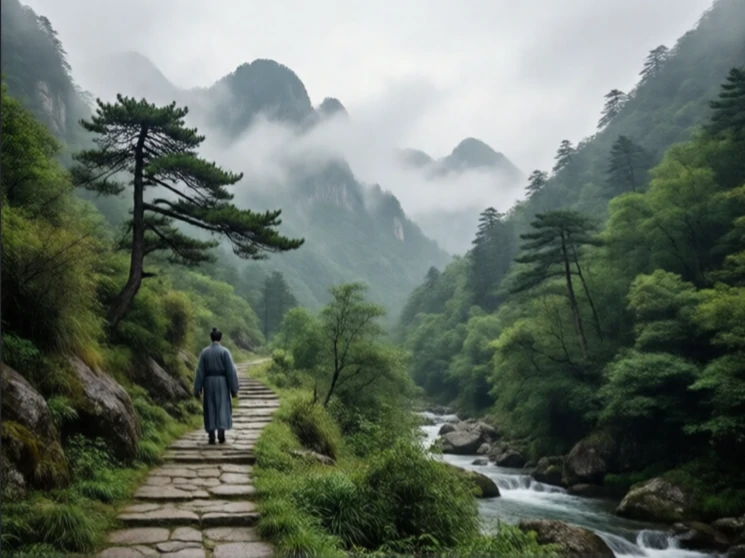
Taoism begins with the observation that the world has a way. The Tao is that way—the patterned, spontaneous process by which heaven, earth, and the ten thousand things unfold. Human beings flourish when they move with it rather than against it.
The foundational texts are the Tao Te Ching, attributed to the legendary Laozi, and the Zhuangzi, a collection of stories and arguments that celebrate freedom from rigid categories. Both warn against forced action and excessive striving. Wu wei, often translated “non-action,” is not passivity but action so attuned to circumstances that it leaves no friction. Simplicity, humility, and a preference for the soft and yielding over the hard and aggressive are recurring themes.
Religious Taoism later developed elaborate rituals, internal alchemy, and a pantheon of deities and immortals. Techniques of breathing, diet, and meditation aimed at longevity or spiritual transcendence. The two streams—philosophical and religious—have always overlapped more than Western classifications sometimes allow.
In ordinary Chinese life Taoist ideas continue to color attitudes toward nature, health, and the limits of human control. The tradition remains less a system of doctrines than a cultivated sensibility: the sense that the universe is already in motion and that wisdom consists in finding one’s place within that motion.
Comments
No comments yet. Be the first to share a thought.
Leave a comment