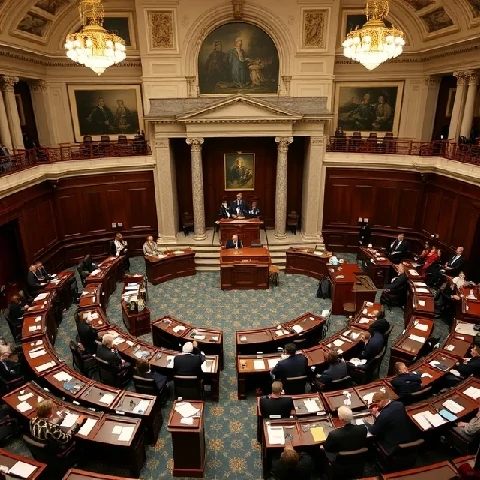
In bicameral legislatures the upper chamber is often called the Senate. Its members may represent subnational units equally, as in the United States, or be elected by different rules and terms than the lower house.
Senates typically review legislation originating in the lower chamber, confirm executive appointments, and ratify treaties. Longer terms and larger constituencies are intended to encourage deliberation and a longer time horizon. Rules of debate in some senates allow extended minority influence.
The political character of a senate depends on its electoral system, powers, and partisan composition. Conflicts between the two chambers can produce delay or force compromise. Reform proposals sometimes target the unrepresentative features of territorial equality or appointed membership. Despite criticism, upper chambers remain part of the constitutional architecture of many democracies.
A senate can block or refine a bill that has already cleared the more popularly responsive house.
Comments
No comments yet. Be the first to share a thought.
Leave a comment