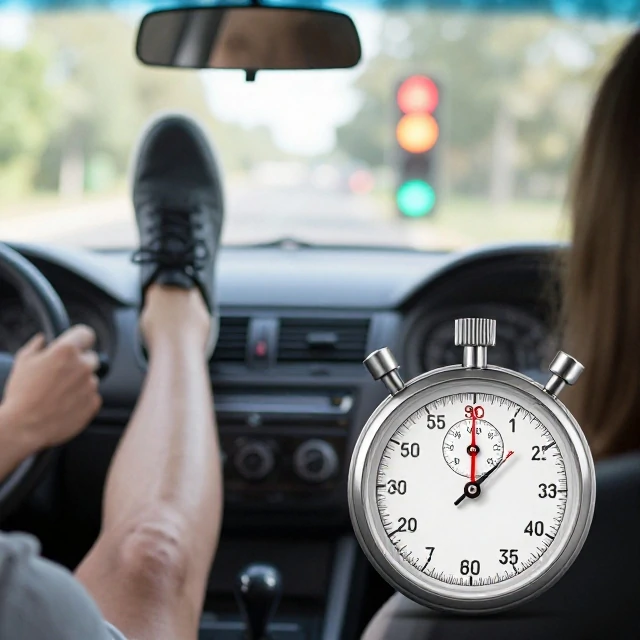
Reaction time is the interval between a stimulus and a response. See a red light. Hit the brake. The time between is your reaction time. It averages about 200 to 250 milliseconds for a simple visual stimulus. It is faster for sound. It is slower when you are tired, distracted, or under the influence.
Reaction time has two parts: the time to detect the stimulus and the time to initiate the response. The brain processes the signal, decides what to do, and sends a command to the muscles. The muscles contract. The whole process takes a fraction of a second. In that fraction, a car at highway speed travels several car lengths.
Factors affecting reaction time
- Age: slower as you get older.
- Fatigue: slower when tired.
- Distraction: slower when multitasking.
- Alcohol and drugs: significantly slower.
- Practice: faster with training.
Reaction time matters in driving, sports, surgery, and gaming. A driver with a 250-millisecond reaction time travels about 7 meters at 100 km/h before even touching the brake. Add braking distance and the total stopping distance grows. That is why tailgating is dangerous. The car in front can brake faster than you can react. Athletes train to reduce reaction time. Sprinters react to the starting gun in under 150 milliseconds. Surgeons practice to improve their response during complications. Reaction time is a fundamental limit of human performance. It cannot be eliminated. It can only be managed. Leave more space. Start braking earlier. Pay attention. The milliseconds add up.
Comments
No comments yet. Be the first to share a thought.
Leave a comment