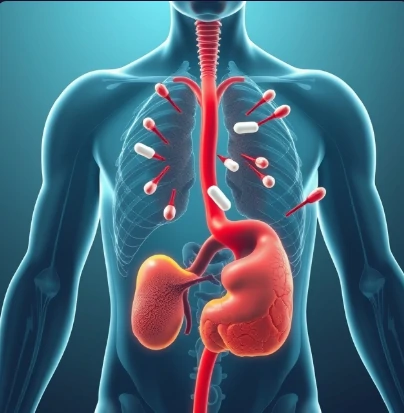
Once a drug reaches the bloodstream, it does not stay there. It moves into tissues, organs, and fat, driven by blood flow, solubility, and protein binding. That movement is distribution, the second step in pharmacokinetics after absorption. Where a drug goes determines whether it reaches its target and how long it lingers.
Blood flow matters most in the early minutes. Highly perfused organs like the brain, heart, and liver receive the drug first. Less perfused tissues like fat and muscle take longer. Lipid-soluble drugs cross cell membranes easily and accumulate in fat, which can act as a reservoir and prolong the drug's effect. Drugs bound to plasma proteins like albumin are inactive while bound, because only free drug can leave the bloodstream and reach tissues. Competition for protein binding can cause interactions: two drugs competing for the same sites can increase the free fraction of one, boosting its effect.
Factors that shape distribution:
- Blood flow. Well-perfused tissues get drug first.
- Lipid solubility. Fat-soluble drugs cross membranes and accumulate in fat.
- Protein binding. Only free drug is active.
- Barriers. The blood-brain barrier and placenta restrict some drugs.
The volume of distribution, a calculated number, reflects how widely a drug spreads through the body.
Comments
No comments yet. Be the first to share a thought.
Leave a comment