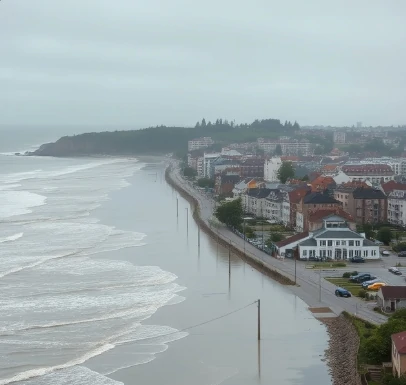
Global mean sea level has been rising for more than a century and the rate has accelerated. The primary causes are thermal expansion of seawater as it warms and the addition of water from melting glaciers and ice sheets. Since the early 1990s the rate has averaged about three millimeters per year, with regional variations.
Local sea-level change can differ from the global mean because of land subsidence or uplift, changes in ocean circulation, and gravitational effects from ice-mass loss. Low-lying coastal cities, small island nations, and wetland ecosystems are already experiencing increased flooding, shoreline erosion, and saltwater intrusion into aquifers and soils.
Projections for the twenty-first century depend strongly on future greenhouse-gas emissions and on the still-uncertain dynamics of the Greenland and Antarctic ice sheets. Adaptation measures include protective infrastructure, nature-based defenses, and, in some places, planned relocation. Continuous monitoring by satellites and tide gauges tracks the evolving threat.
Even a few tens of centimeters of rise can dramatically increase the frequency of coastal flooding during storms.
Comments
No comments yet. Be the first to share a thought.
Leave a comment