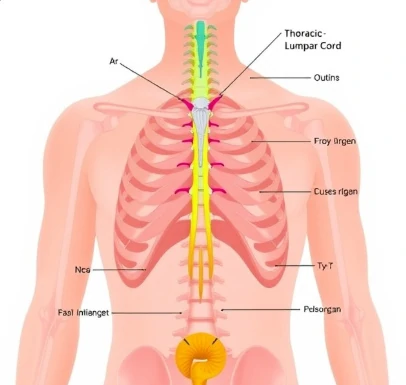
The sympathetic nervous system is the division of the autonomic nervous system that prepares the body for rapid action in the face of threat or challenge. It accelerates heart rate, dilates pupils, redirects blood flow to skeletal muscles, and releases glucose from energy stores. The classic description is “fight or flight.”
Sympathetic neurons leave the spinal cord and form synapses in ganglia close to the spinal column. From there, postganglionic fibers reach target organs. The neurotransmitter at most of these junctions is norepinephrine. The adrenal medulla, itself a modified sympathetic ganglion, releases epinephrine into the bloodstream, amplifying the response.
The system works in opposition to the parasympathetic division, which promotes rest and digestion. Most organs receive dual innervation, and the balance between the two divisions shifts according to current demands. Chronic sympathetic overactivation is associated with elevated cardiovascular risk.
- Mobilizes energy for immediate action
- Increases heart rate and blood pressure
- Uses norepinephrine at most postganglionic synapses
- Opposes parasympathetic activity
Understanding the sympathetic response is essential for explaining both adaptive arousal and the physiological costs of prolonged stress.
Comments (2)
Leave a comment