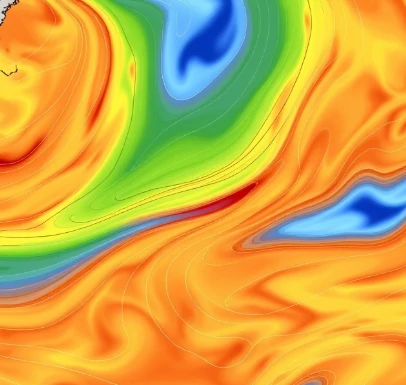
High in the troposphere, narrow ribbons of very strong wind circle the globe. These are the jet streams. Speeds often exceed 100 miles per hour and can reach more than 200 miles per hour in the core.
The polar jet stream sits near the boundary between cold polar air and warmer mid-latitude air. The subtropical jet lies farther equatorward. Both influence the development and track of surface weather systems. Waves in the jet stream create areas of rising and sinking air that favor storm formation or clearing.
Aircraft flying eastward often ride the jet to save time and fuel; westbound flights avoid the strongest core. Seasonal shifts in jet position help explain why some winters are stormy and others mild. Climate trends appear to be altering the jet’s behavior in ways that affect extreme weather frequency.
Tracking the jet remains a daily task for forecasters worldwide.
Comments
No comments yet. Be the first to share a thought.
Leave a comment