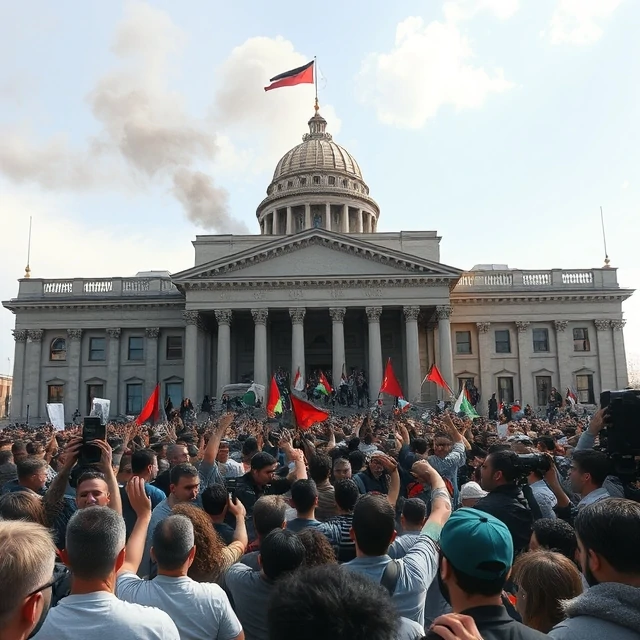
Political and social orders sometimes break with dramatic speed. A revolution is a fundamental and relatively rapid change in the distribution of political power and often in social and economic structures, typically involving mass mobilization and the overthrow of an existing regime.
The English, American, French, Russian, and Chinese revolutions are classic cases, each with distinct causes, trajectories, and outcomes. Revolutions may produce lasting institutional innovation or cycle into new forms of authoritarianism. Ideology, economic crisis, and state weakness frequently interact in their origins.
Historians debate definitions—how much change, how fast, how violent—and compare revolutions across cultures. The concept has also been extended to scientific, industrial, and cultural transformations. Studying revolutions reveals both the contingency of political order and the difficulty of controlling radical change once begun.
- Fundamental rapid change in political power
- Often involves mass mobilization and regime overthrow
- Produces varied institutional outcomes
- Subject of comparative historical analysis
Comments
No comments yet. Be the first to share a thought.
Leave a comment