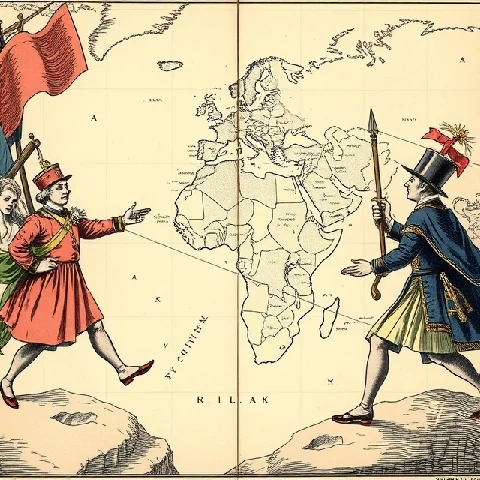
Power can expand through formal annexation or informal dominance. Imperialism is the policy or practice of extending a state’s influence over other territories and peoples, whether by direct rule, economic control, or political pressure.
The term is often associated with the late-nineteenth-century European scramble for colonies, yet similar patterns appear in many eras and regions. Economic motives, strategic rivalry, and ideologies of cultural superiority intertwined. Resistance and collaboration both shaped outcomes on the ground.
Historians debate the relative weight of economic versus political drivers and the effects on both metropole and periphery. Imperialism reconfigured global trade, migration, and cultural exchange. Its formal dismantling after 1945 did not erase every form of asymmetric power between states.
- Extension of state power over other territories
- May involve direct or informal control
- Driven by mixed economic and strategic motives
- Reshaped global relations and local societies
Comments
No comments yet. Be the first to share a thought.
Leave a comment