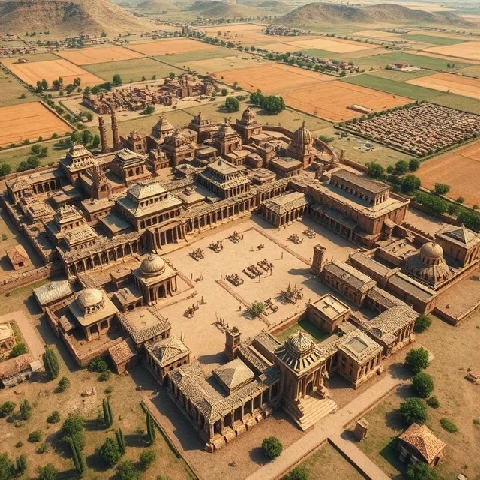
Some societies developed cities, writing, and centralized authority. Civilization is a term historians and archaeologists use for complex, organized societies that display urban centers, specialized labor, institutionalized government, and often literacy or sophisticated record-keeping.
Early examples arose in river valleys—Mesopotamia, Egypt, the Indus, and China—where intensive agriculture supported dense populations. Later civilizations appeared in Mesoamerica, the Andes, and elsewhere under different ecological conditions. Trade, warfare, and cultural exchange linked many of them across long distances.
The word can carry evaluative overtones, implying superiority over non-urban societies; modern scholarship tends to treat it as a descriptive category for a particular form of social complexity. Collapse, transformation, and continuity all appear in the long-term record. Studying civilizations reveals both the achievements and the vulnerabilities of large-scale organization.
- Complex organized society with cities and government
- Often features writing and specialized labor
- Arose independently in several world regions
- Studied as a form of social complexity
Comments
No comments yet. Be the first to share a thought.
Leave a comment