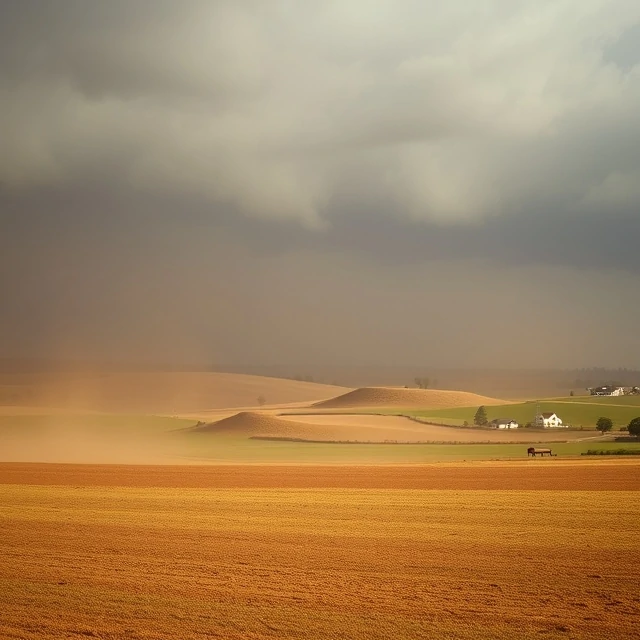
Soil erosion is the wearing away of topsoil by wind, water, or human activity. It happens naturally, but human land use accelerates it dramatically. Clearing forests, plowing steep slopes, and overgrazing expose soil to rain and wind. Once topsoil is gone, it takes centuries to rebuild.
The consequences are severe. Farmers lose fertile land. Sediment clogs rivers and reservoirs. Nutrients and pesticides wash into waterways, causing algal blooms. Dust storms carry soil thousands of kilometers. The Dust Bowl of the 1930s displaced millions of people from the American plains. Similar crises are unfolding in parts of Africa and Asia today.
Solutions exist. Contour plowing, terracing, and cover crops hold soil in place. No-till farming leaves residue on the surface and improves soil structure. Windbreaks of trees and shrubs slow wind. Restoring vegetation on degraded land reduces runoff. These practices cost money and require planning. The alternative is losing the ground beneath our feet.
Main causes
- Deforestation
- Overgrazing
- Intensive plowing
- Construction and mining
- Climate change and drought
Comments
No comments yet. Be the first to share a thought.
Leave a comment