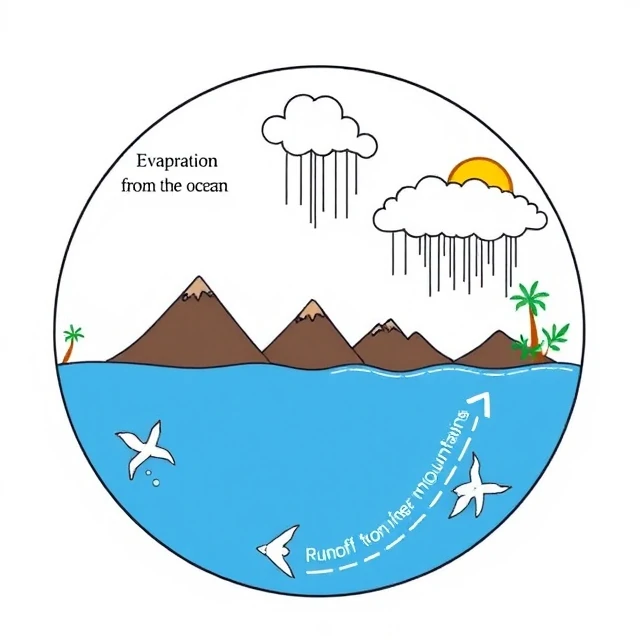
Water does not disappear. It moves. The water cycle describes the continuous circulation of water through evaporation, condensation, precipitation, and collection. The same molecule might spend a thousand years in an ocean, a week in a cloud, and a day in a river.
The sun drives the cycle. It heats oceans, lakes, and soil, causing water to evaporate into vapor. Plants add more through transpiration, releasing water from their leaves. The vapor rises, cools, and condenses into clouds. When droplets get heavy enough, they fall as rain, snow, sleet, or hail. Some of that water runs off into rivers and streams. Some soaks into the ground and becomes groundwater. Some evaporates again.
Main stages
- Evaporation: liquid water becomes vapor
- Condensation: vapor cools and forms clouds
- Precipitation: water falls as rain or snow
- Collection: water gathers in oceans, lakes, and aquifers
- Runoff: water flows across land back to the sea
Groundwater matters more than most people realize. It supplies drinking water to billions and feeds rivers during dry spells. When we pump it faster than it recharges, the cycle goes out of balance. The water is still there, technically, but it is no longer where we need it.
Comments (2)
Leave a comment