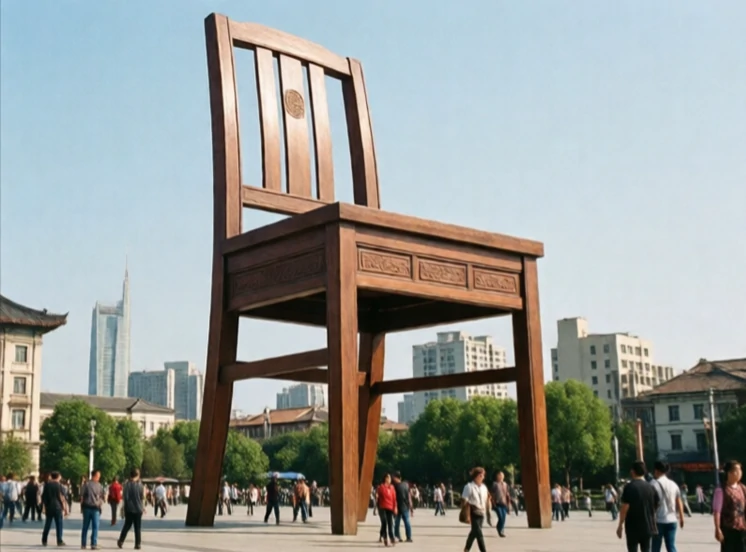
Scale refers to the size of an element relative to other elements or to the human body. A poster on a wall, a phone in a hand, a headline next to body text. Scale creates hierarchy, drama, and context. A tiny object next to a huge one draws attention to both. A map at 1:100,000 shows a region. The same map at 1:10,000 shows a neighborhood. Changing scale changes what you can see.
Designers use scale deliberately. In typography, a modular scale sets font sizes in a fixed ratio, so headings and body text relate predictably. In layout, scale determines how much space an image occupies. In product design, scale determines whether a tool fits a hand comfortably. Unexpected scale can surprise. A giant chair in a public square makes people stop and look. A miniature book in a display case does the same.
Types of scale
- Relative: one element compared to another.
- Absolute: a fixed measurement, like millimeters.
- Human: sized to the body, like a door handle.
- Map scale: ratio of map distance to real distance.
Scale is not the same as size. Size is a measurement. Scale is a relationship. A small room can feel large if the furniture is scaled down.
Comments
No comments yet. Be the first to share a thought.
Leave a comment