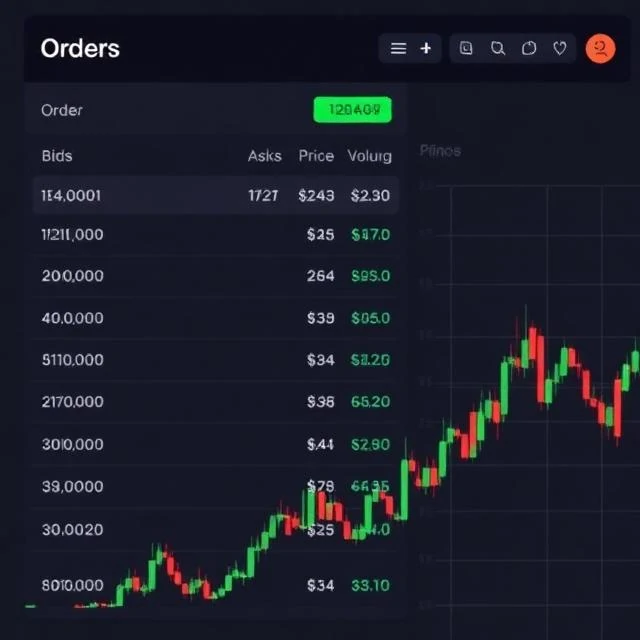
An order book lists every open buy and sell order for a trading pair. Bids are the buy orders, sorted from highest price to lowest. Asks are the sell orders, sorted from lowest price to highest. The gap between the best bid and the best ask is the spread. A tight spread means liquidity is good. A wide spread means trading is thin and you pay more to get in or out. Centralized exchanges run order books on their own servers. They match buyers and sellers continuously.
Order books are the traditional way to trade. Stock exchanges work this way. Crypto exchanges copied the model because it is efficient for high-volume pairs. Market makers post orders on both sides of the book to earn the spread and provide liquidity. Without them, spreads widen and trading becomes expensive. Decentralized exchanges mostly abandoned order books because updating them on-chain is slow and costly. Automated market makers replaced them with liquidity pools. A few DEXs use on-chain order books or hybrid models, but the dominant design is still the pool. Order books remain the standard for centralized trading and will probably stay that way.
Order book terms
- Bid — a buy order
- Ask — a sell order
- Spread — the difference between the best bid and best ask
- Depth — how much volume sits at each price level
- Market order — buys or sells at the best available price
Thin order books are dangerous for large trades. A big market order can slip through several price levels and fill at a much worse average price than expected.
Comments
No comments yet. Be the first to share a thought.
Leave a comment