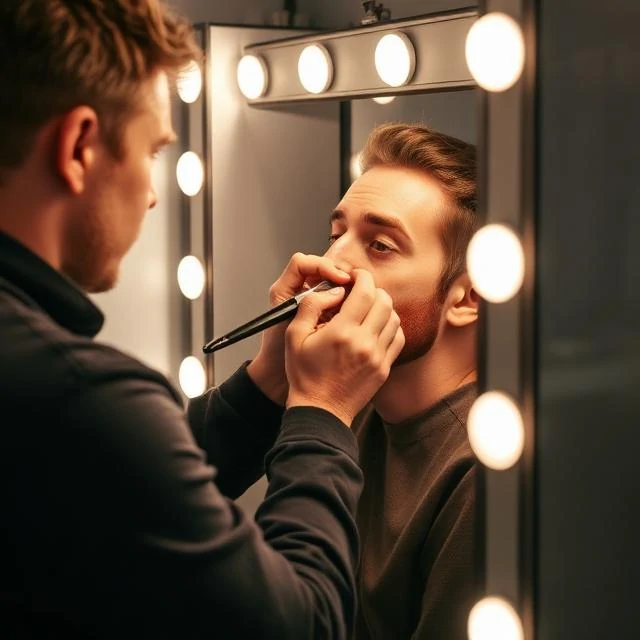
Makeup in film is not the same as makeup in daily life. It is designed for the camera. It must look natural under the lights, hold up over a long shooting day, and support the character. A character's makeup can reveal their age, health, class, and personality. It can make an actor look younger, older, injured, or transformed. It is a tool of storytelling.
Makeup artists work in several specialties. Beauty makeup enhances the actor's appearance. Character makeup changes it, often with prosthetics, wigs, and contact lenses. Special effects makeup creates wounds, burns, and creatures. Period makeup recreates the styles of a specific era. Each requires different skills and materials. The makeup artist works with the director and the costume designer to define the character's look. They also work with the cinematographer to ensure the makeup looks right on camera. A makeup that looks good in person may look shiny or unnatural on screen.
Makeup must be maintained throughout the shoot. The makeup artist checks the actor before each take, touching up as needed. They track continuity, ensuring that a wound looks the same in every shot. They work long hours, often starting before dawn and finishing after dark. The work is detailed, physical, and collaborative. When it works, the audience does not notice it. They just believe the character.
Comments
No comments yet. Be the first to share a thought.
Leave a comment