Some reactions are explosive. Others take years. The reaction rate is the speed at which reactants are converted into products. It is usually expressed as the change in concentration of a reactant or product per unit time. Rate = change in concentration divided by change in time. The rate can be measured by monitoring absorbance, pressure, conductivity, or pH.
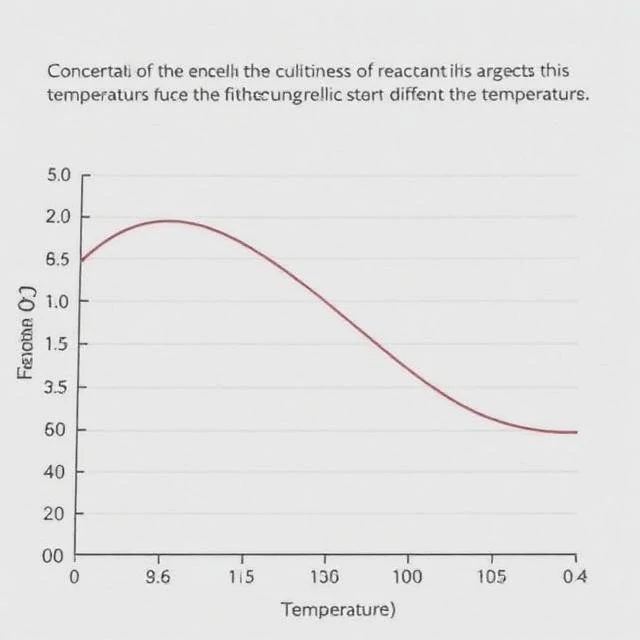
Several factors affect the rate. Concentration increases the rate because more particles collide. Temperature increases the rate because particles move faster and collide more energetically. Surface area increases the rate for solid reactants because more particles are exposed. Catalysts increase the rate by lowering the activation energy. The nature of the reactants matters too. Some bonds are easier to break than others.
The rate law expresses the relationship between rate and concentration. For a reaction aA + bB -> products, the rate law is often rate = k[A]^m[B]^n, where k is the rate constant and m and n are the reaction orders. The orders are determined experimentally, not from the balanced equation. The overall order is the sum of the individual orders. The rate constant depends on temperature and is related to activation energy by the Arrhenius equation.
Reaction rates are important in industry, biology, and the environment. Catalysts speed up industrial processes. Enzymes speed up metabolic reactions. Rusting is a slow oxidation reaction. Combustion is a fast one. Understanding rates allows control.
Comments
No comments yet. Be the first to share a thought.
Leave a comment