A gene is a segment of DNA that encodes a functional product. That product is usually a protein, but it can also be a functional RNA molecule. Genes are the units of inheritance. They carry the information that determines traits, from eye color to enzyme activity to disease susceptibility. The human genome contains about 20,000 protein-coding genes.
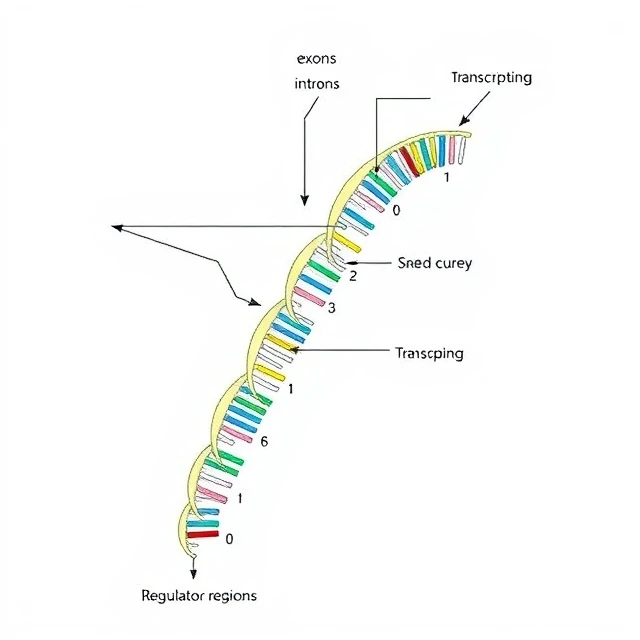
Genes have a structure. The coding sequence, called exons, is interrupted by non-coding sequences called introns. Before a protein is made, the introns are removed and the exons are spliced together. Regulatory regions upstream and downstream of the gene control when and where it is expressed. Transcription factors bind these regions and turn the gene on or off. The same gene can produce different proteins through alternative splicing.
Genes do not act alone. They interact with each other and with the environment. A single gene can affect many traits, and a single trait can be influenced by many genes. Most common diseases, like diabetes and heart disease, involve dozens or hundreds of genes, each with a small effect. The environment modifies their expression.
Genes are not destiny. They are a set of possibilities. How those possibilities unfold depends on the organism and its surroundings.
Comments (2)
Leave a comment