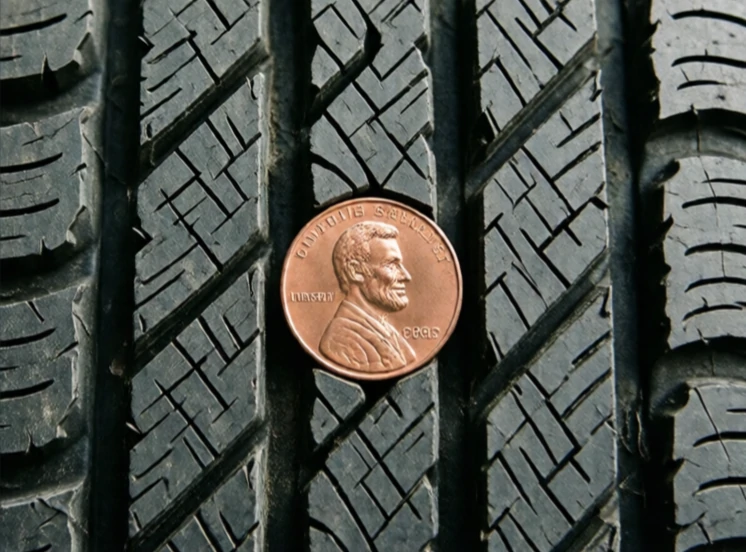
Tread is the patterned rubber on a tire's outer surface. Grooves channel water away from the contact patch. Blocks and sipes grip the road. The pattern is not decorative. It is engineered for specific conditions, from dry pavement to mud to snow.
Tread depth matters. New tires start around 10/32 of an inch. At 2/32, they are legally worn out in most places. Wet grip drops sharply below 4/32. A simple test: insert a penny upside down into the groove. If Lincoln's head is fully visible, the tire is near the limit.
Tread pattern types
- Symmetric: all-season, can be rotated in any position.
- Asymmetric: different inner and outer blocks for cornering.
- Directional: V-shaped grooves for water evacuation, one-way rotation.
- Winter: dense sipes and soft compound for cold grip.
- Off-road: large voids to clear mud and rocks.
Uneven tread wear tells a story. Worn shoulders suggest underinflation or hard cornering. Worn center suggests overinflation. Cupping or scalloped spots point to worn shocks or bad alignment. Rotating tires every 5,000 to 8,000 miles spreads the wear and extends the life of the set.
Comments
No comments yet. Be the first to share a thought.
Leave a comment