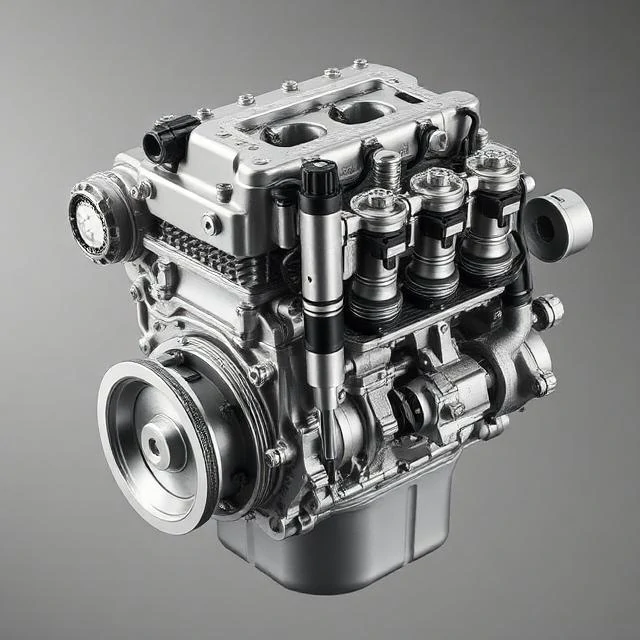
Fuel injection sprays fuel into an engine's combustion chamber or intake port. It replaced the carburetor because it is more precise, more efficient, and cleaner. A computer controls the injectors, adjusting the amount of fuel based on airflow, engine speed, temperature, and oxygen sensor readings. The result is better fuel economy, lower emissions, and more power.
There are several types. Port fuel injection sprays fuel into the intake port, where it mixes with air before entering the cylinder. Direct injection sprays fuel directly into the cylinder, which allows more precise control and higher compression ratios. Common-rail diesel injection uses very high pressure to atomize diesel fuel for cleaner combustion. Each type has advantages and is used in different applications.
Fuel injectors are precision components. They have tiny nozzles that must spray a fine mist. Deposits can clog them over time, causing rough idle, misfires, and poor fuel economy. Fuel additives and professional cleaning can help, but eventually injectors may need replacement. Direct injection engines are more prone to carbon buildup on the intake valves because fuel no longer washes them clean.
Fuel injection was first used in aircraft engines and race cars before spreading to production cars in the 1980s. By the 1990s, it had almost completely replaced carburetors. It is one of the key technologies that made modern engines cleaner and more efficient.
Comments
No comments yet. Be the first to share a thought.
Leave a comment