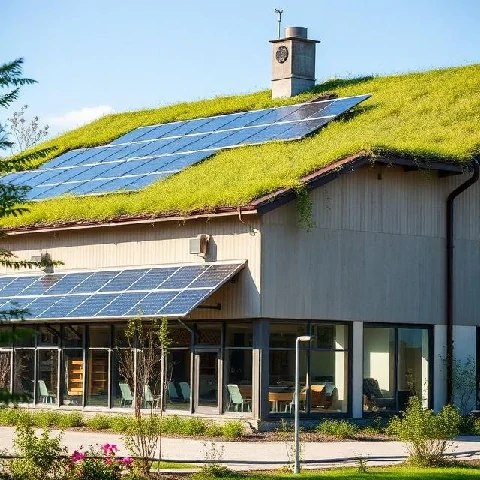
Sustainable design is an approach that minimizes a building's environmental impact throughout its life. It considers energy, water, materials, waste, and health. It is not a single technology or style. It is a way of thinking that runs through every decision, from site selection to demolition.
The goals are straightforward: use less, waste less, and design for longevity. A sustainable building might generate its own energy with solar panels, collect rainwater for irrigation, use recycled materials, and provide abundant daylight and fresh air. It might be designed to last a hundred years instead of thirty. It might be built to be disassembled, so materials can be reused later.
Sustainable design also has a social dimension. A building that is healthy for its occupants, accessible to its community, and respectful of its context is more sustainable than one that is merely efficient. A green building that nobody wants to use is not sustainable.
The field is evolving. Net-zero energy, carbon-neutral construction, and regenerative design are pushing the boundaries. The common thread is a recognition that buildings are part of a larger system, and that system has limits.
Comments
No comments yet. Be the first to share a thought.
Leave a comment