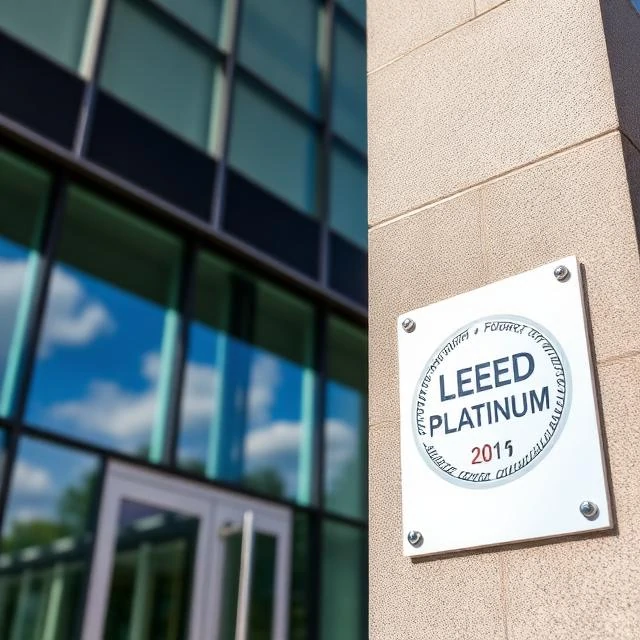
A developer wants to prove a new office tower is genuinely green, not just painted green. LEED Certification is one way to do it. The rating system, run by the U.S. Green Building Council, awards points across categories like energy performance, water use, materials, indoor air quality, and site selection. A project accumulates enough points and earns a tier: Certified, Silver, Gold, or Platinum.
Points are not handed out for good intentions. A project must document energy modeling, commissioning, construction waste diversion, and occupant comfort measures. A third party reviews the submission. That verification is what separates LEED from a marketing claim.
Critics point out that LEED measures design intent more than actual performance. A building can earn Platinum and still consume more energy than predicted. The rating system has tightened over the years, adding performance-based credits and recertification requirements.
For owners, certification can unlock tax incentives, attract tenants, and signal seriousness about sustainability. For architects, it is a checklist that sometimes pushes better decisions and sometimes adds paperwork. Whether it changes the building or just the plaque is a fair question.
Comments
No comments yet. Be the first to share a thought.
Leave a comment