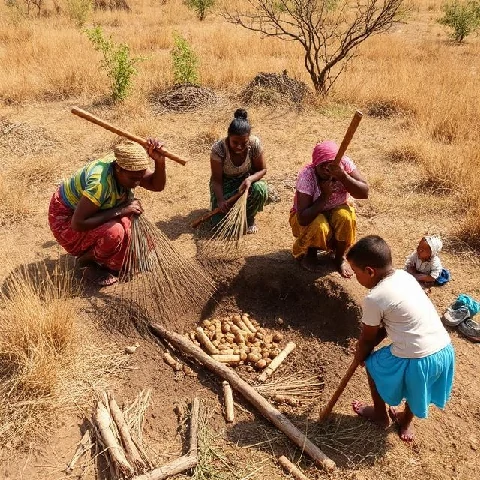
Foraging is a subsistence strategy based on hunting, fishing, and gathering wild plants. It is the oldest human way of life, practiced for over 90 percent of our species' history. Today only a few groups rely on it full-time, including some San communities in southern Africa and a handful of others in remote regions. Most have been pushed onto marginal land by states and agriculture.
Foraging does not mean constant hunger. Studies of groups like the !Kung show that foragers often work fewer hours per week than farmers or office workers. Their diets tend to be varied and nutritionally adequate. What they lack is surplus. They move with the seasons, own little, and share what they get. Mobility is key: it allows them to follow resources and avoid depleting any one area.
Common features
- Small mobile bands of related families.
- Division of labor by gender and age.
- Sharing norms that discourage hoarding.
- Detailed ecological knowledge of plants and animals.
Foraging is not a failed stage of evolution. It is a successful adaptation that supported human life for millennia.
Comments
No comments yet. Be the first to share a thought.
Leave a comment