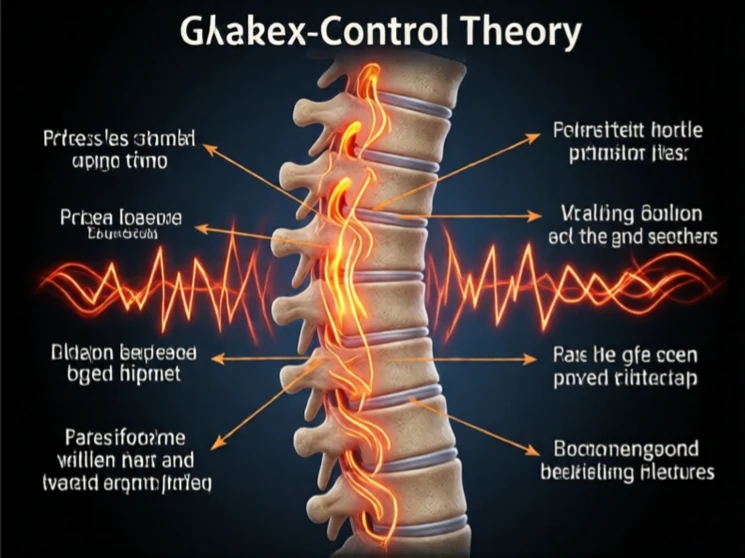
Gate-control theory proposes that the spinal cord contains a neurological “gate” that either blocks pain signals or allows them to pass to the brain. The gate is opened by activity in small nerve fibers that carry pain and closed by activity in larger fibers or by signals descending from the brain.
Ronald Melzack and Patrick Wall introduced the theory in 1965. It explained why rubbing a bumped elbow can reduce pain—the large-fiber activity from touch closes the gate—and why psychological factors such as attention, expectation, and emotion can amplify or diminish pain. The substantia gelatinosa in the dorsal horn of the spinal cord was proposed as the site of the gate.
Later research has refined the anatomical details, yet the core idea remains influential. Pain is not a simple thermometer of tissue damage; it is a construct modulated at multiple levels of the nervous system. The theory opened the way for treatments that target the gate—transcutaneous electrical nerve stimulation, cognitive strategies, and certain medications—rather than only the peripheral injury.
Pain reaches awareness only if the gate allows it through. That insight changed how pain is understood and treated.
Comments
No comments yet. Be the first to share a thought.
Leave a comment