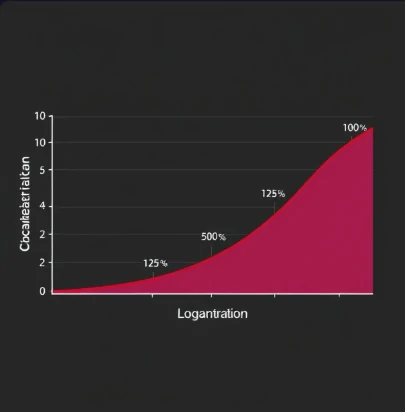
Give a drug and the body starts eliminating it. Half-life is the time it takes for the concentration in the blood to fall by half. A drug with a four-hour half-life drops from 100 to 50 in four hours, then to 25 in eight, and so on. After about five half-lives, roughly 97 percent of the drug is gone. That is why half-life determines dosing frequency. A drug with a short half-life must be taken often, while one with a long half-life can be taken once a day or even less.
Half-life is not a fixed property. It changes with liver function, kidney function, age, and interactions with other drugs. A patient with kidney disease may eliminate a drug more slowly, extending its half-life and increasing the risk of toxicity. A drug that induces liver enzymes can shorten the half-life of another drug, reducing its effect. Half-life also varies between individuals for genetic reasons. Some people metabolize drugs faster than others because of variations in cytochrome P450 enzymes.
What half-life affects:
- Dosing interval. How often a drug must be taken.
- Time to steady state. About five half-lives to reach stable blood levels.
- Time to elimination. About five half-lives to clear the drug.
- Accumulation. Drugs with long half-lives can build up if dosed too frequently.
Half-life is a pharmacokinetic parameter, not a measure of how long a drug's effect lasts. Some drugs have effects that outlast their presence in the blood.
Comments (3)
Leave a comment