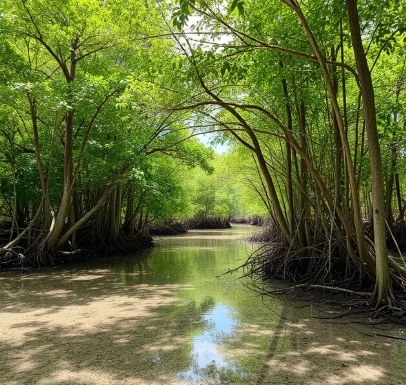
Coastal ecosystems such as mangroves, seagrass meadows, and salt marshes bury organic carbon in their soils at rates that often exceed those of terrestrial forests. This stored carbon is known as blue carbon. Because the sediments remain waterlogged and low in oxygen, decomposition is slow and the carbon can remain locked away for centuries.
Protecting and restoring these habitats therefore offers a dual benefit: biodiversity conservation and climate mitigation. When the ecosystems are degraded, the stored carbon can be released back to the atmosphere as carbon dioxide. Accurate accounting of blue-carbon stocks is becoming part of national climate strategies and carbon-market projects.
Research focuses on measuring burial rates, understanding the fate of carbon once it leaves the coastal zone, and quantifying the additional benefits of coastal protection and fisheries support. Blue-carbon initiatives are most effective when they also address the local social and economic factors that drive habitat loss.
A healthy seagrass meadow can accumulate carbon in its sediments year after year with little visible change at the surface.
Comments
No comments yet. Be the first to share a thought.
Leave a comment