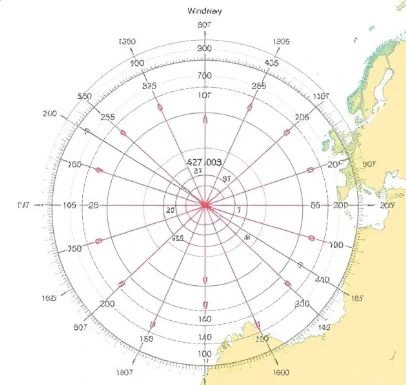
Over long periods, wind at a given location tends to blow more often from one direction than from others. That preferred direction defines the prevailing wind. Global circulation patterns produce the major belts: trade winds, westerlies, and polar easterlies.
Local geography modifies the large-scale flow. Mountain ranges, coastlines, and valleys can create their own prevailing directions. Knowledge of prevailing winds guides the orientation of runways, the placement of wind turbines, and the design of buildings for natural ventilation.
Wind roses summarize the frequency of winds from each direction over months or years. Seasonal shifts in prevailing winds are central to monsoon climates. Changes in prevailing wind patterns can signal broader shifts in atmospheric circulation.
Mariners and early explorers relied on knowledge of these winds for navigation.
Comments
No comments yet. Be the first to share a thought.
Leave a comment