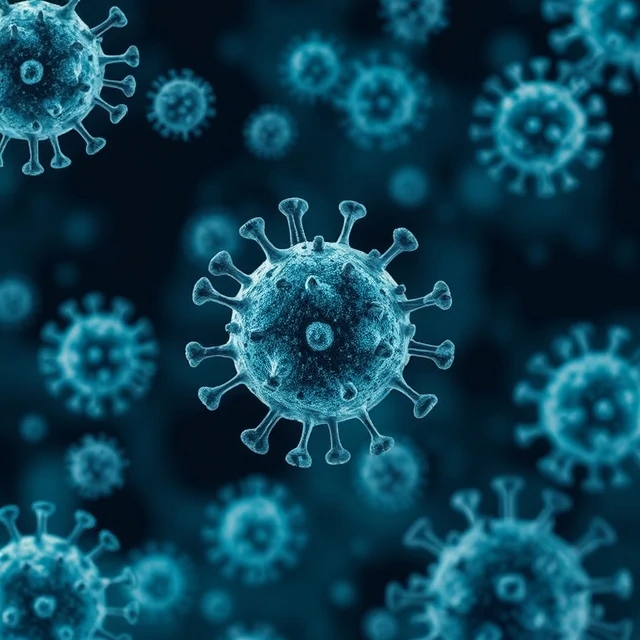
The smallest infectious agents can still shut down societies. A virus is a microscopic infectious particle consisting of genetic material enclosed in a protein coat that can replicate only inside the living cells of a host.
Viruses inject their genome into host cells and hijack cellular machinery to make new particles. They cause illnesses ranging from the common cold to HIV, influenza, COVID-19, and viral hepatitis. Some integrate into host DNA or persist latently for years. Diagnosis uses antigen detection, nucleic-acid amplification, culture, or serology.
Antiviral drugs exist for a limited number of viruses; vaccination remains the most effective broad strategy. Because viruses mutate, surveillance and periodic vaccine updates are required for agents such as influenza. Infection control depends on understanding each virus’s transmission route.
- Obligate intracellular infectious particle with genetic material
- Replicates only inside host cells
- Causes a wide spectrum of human disease
- Controlled mainly by vaccines and limited antivirals
Comments
No comments yet. Be the first to share a thought.
Leave a comment