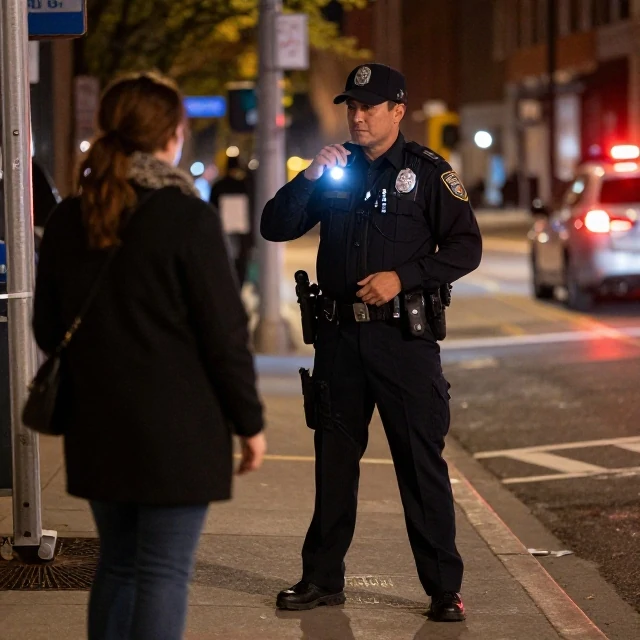
Reasonable suspicion is a legal standard that allows police to stop and briefly detain someone based on specific facts. It is lower than probable cause. It requires more than a hunch. The officer must point to particular observations or information that suggest criminal activity is afoot.
The Supreme Court established the standard in Terry v. Ohio in 1968. The case involved a police officer who observed men repeatedly walking past a store window and concluded they were casing the place. The Court held that the stop was lawful because the officer had reasonable suspicion based on his observations and experience.
What reasonable suspicion allows
- Brief investigative detention.
- A pat-down frisk for weapons if the officer fears for safety.
- Questions about identity and activity.
- It does not allow a full search or arrest.
- It does not justify a prolonged detention without probable cause.
Reasonable suspicion is fact-specific. A person running from a high-crime area at night may or may not justify a stop, depending on the totality of the circumstances. A drug courier profile alone is not enough. Courts look at what the officer knew at the moment of the stop, not what they learned afterward. The standard balances public safety against the Fourth Amendment right against unreasonable seizures. It is a low bar, but it is not no bar at all.
Comments
No comments yet. Be the first to share a thought.
Leave a comment