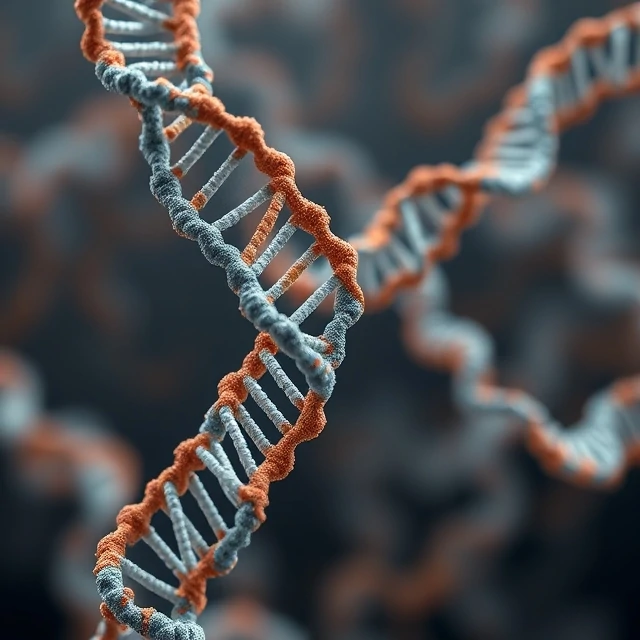
Meters of DNA must fit inside a microscopic nucleus. Histones are the small, positively charged proteins that DNA wraps around to form nucleosomes, the basic packing units of chromatin. Five main types—H1, H2A, H2B, H3, and H4—participate in this packaging.
Chemical modifications to histone tails—acetylation, methylation, phosphorylation—alter chromatin accessibility and thereby regulate gene expression. These modifications form part of the epigenetic code. Specialized histone variants replace standard histones at particular genomic locations.
Disruptions in histone modification machinery are implicated in cancer and developmental disorders. Drugs that inhibit histone-modifying enzymes are used in certain therapies. Understanding histone biology links genome structure to dynamic gene regulation.
- Protein that packages DNA into nucleosomes
- Positively charged and binds DNA tightly
- Subject to regulatory chemical modifications
- Central to chromatin structure and gene control
Comments
No comments yet. Be the first to share a thought.
Leave a comment