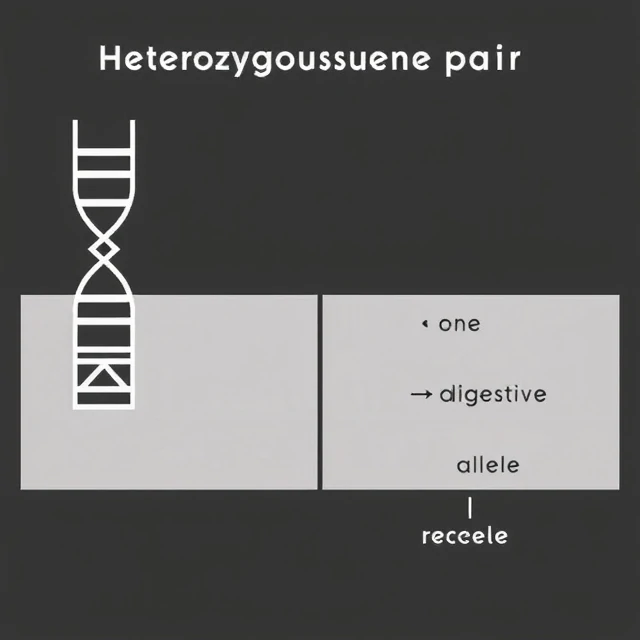
At any given gene an individual may carry two different versions. Heterozygous describes the state of having two dissimilar alleles at a locus. One allele may be dominant and the other recessive, or the alleles may be codominant or show incomplete dominance.
Heterozygotes for recessive disease alleles are carriers and usually healthy. Heterozygotes for dominant disease alleles typically express the condition. In population genetics, heterozygosity is a measure of genetic diversity; higher heterozygosity often correlates with greater adaptive potential.
Molecular tests distinguish heterozygous from homozygous genotypes by detecting both alleles. Heterozygosity is restored each generation by mating between individuals carrying different alleles. It is a fundamental concept for understanding inheritance patterns and genetic variation.
- Having two different alleles at a locus
- Can be carrier state for recessive traits
- May express dominant phenotypes
- Indicates genetic diversity at the locus
Comments
No comments yet. Be the first to share a thought.
Leave a comment