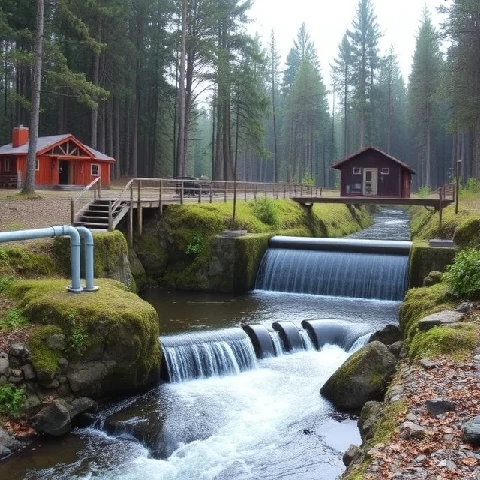
Hydropower uses flowing or falling water to generate electricity. It is the oldest and largest source of renewable power. Dams store water and release it through turbines. Run-of-river projects use the natural flow without a large reservoir. Tidal and wave projects capture the motion of the ocean.
The basic process is simple. Water flows through a turbine, spinning it. The turbine turns a generator, producing electricity. The amount of power depends on the height the water falls and the volume of flow. A large dam with a big drop and strong flow can generate gigawatts.
Hydropower has strong advantages. It runs day and night. It can ramp up and down quickly to follow demand. It stores energy in reservoirs. It also has environmental costs. Dams disrupt ecosystems, block fish, and displace people. Climate change affects rainfall patterns, making some projects less reliable. Still, hydropower remains a backbone of low-carbon grids.
Common types
- Reservoir dams
- Run-of-river
- Pumped storage
- Tidal power
- Wave power
Comments
No comments yet. Be the first to share a thought.
Leave a comment