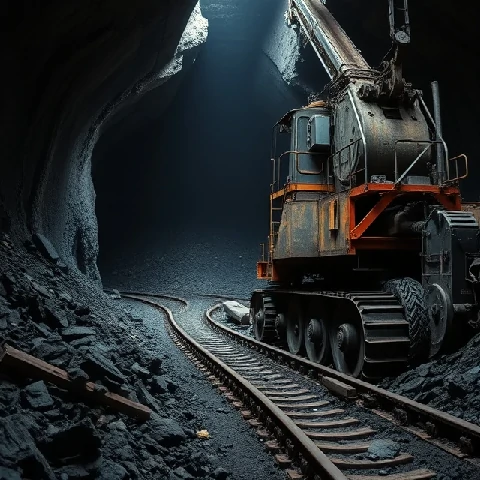
Coal, oil, natural gas, and uranium are nonrenewable resources. They formed over millions of years from ancient organic matter and geological processes. Humans extract them far faster than they can be replaced. Once burned or consumed, they are gone. The term does not mean the resource will disappear tomorrow. It means the supply is finite and the rate of use exceeds the rate of formation.
Fossil fuels supply most of the world's energy. They power vehicles, generate electricity, heat buildings, and produce plastics, fertilizers, and medicines. Their use has lifted billions of people out of poverty and driven economic growth. It has also released carbon dioxide into the atmosphere, driving climate change. The tension between energy access and environmental impact is one of the defining challenges of the century. Renewable sources like solar and wind are expanding rapidly, but they still supply a smaller share of global energy than fossil fuels. Minerals like lithium and cobalt are also nonrenewable, though they can be recycled.
Common nonrenewable resources
- Coal, oil, and natural gas.
- Uranium for nuclear power.
- Minerals and metals like copper and lithium.
- Groundwater in some aquifers.
Nonrenewable does not mean we will run out soon. It means the supply will run out eventually, and the environmental costs of extraction and use are real.
Comments (2)
Leave a comment