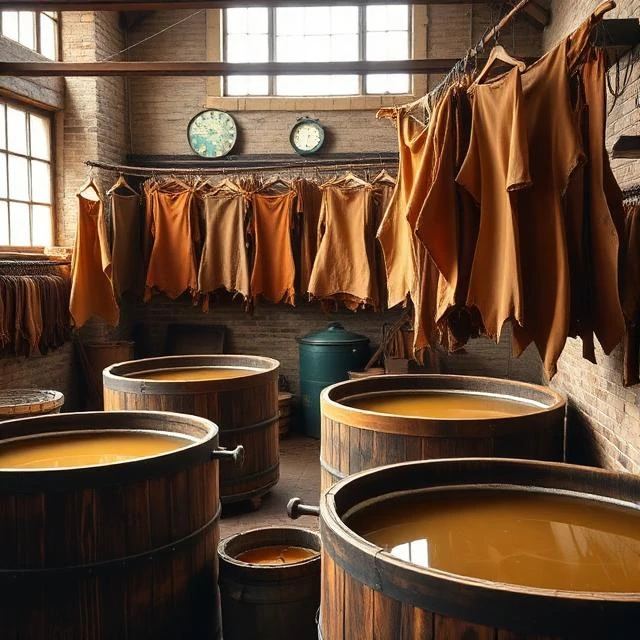
Tanning treats animal hides so they become leather. Raw hide is perishable. It dries hard, rots when wet, and attracts insects. Tanning stabilizes the collagen in the skin so it stays flexible, resists decay, and holds up to use. The process has been practiced for thousands of years, and the basic chemistry has not changed as much as you might think.
Vegetable tanning uses tannins from tree bark, leaves, and roots. It takes weeks, sometimes months, and produces firm leather that ages beautifully. Chrome tanning uses chromium salts and takes hours. It is faster and produces softer, more uniform leather, which is why most shoe and garment leather is chrome-tanned. Brain tanning uses animal brains, a method used by many indigenous cultures. The lecithin in the brain oils the hide and makes it soft.
Main tanning methods
- Vegetable tanning — slow, firm leather, natural tannins
- Chrome tanning — fast, soft, uniform, most common today
- Brain tanning — traditional, very soft, labor intensive
- Combination tanning — chrome first, then vegetable retan for specific properties
Tanning is messy, smelly work. The hides need scraping, soaking, and stretching between steps. The finished leather is worth it. Good leather outlasts synthetic materials and develops a patina with use.
Comments
No comments yet. Be the first to share a thought.
Leave a comment