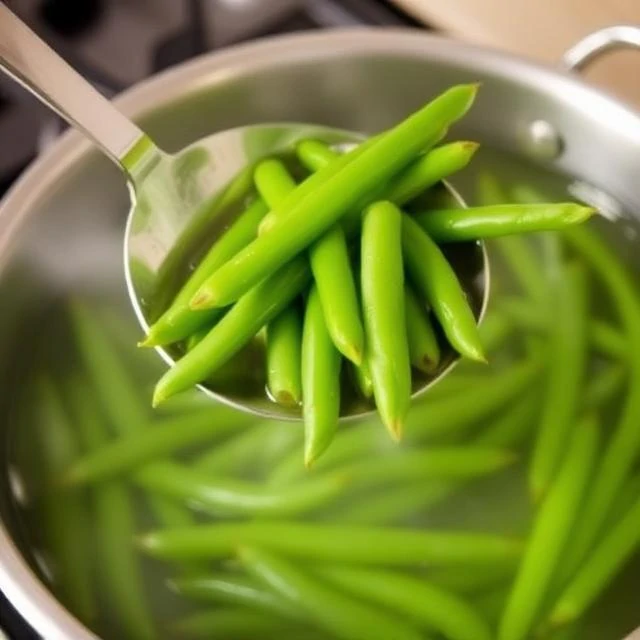
Blanching briefly boils food then plunges it into ice water. The boiling cooks the food for a short time, usually one to three minutes. The ice water stops the cooking immediately. The result is food that is tender but still crisp, bright in color, and set in texture. Green beans, broccoli, and asparagus are common candidates. The technique is simple, but the timing is critical. A minute too long, and the vegetable turns mushy. A minute too short, and it stays raw.
Blanching serves several purposes. It sets the color of green vegetables by fixing the chlorophyll. It loosens the skins of tomatoes, peaches, and almonds, making them easy to peel. It removes bitterness from some greens. It par-cooks vegetables before a final sauté or roast, so they finish evenly. It also prepares vegetables for freezing. Blanching deactivates the enzymes that cause browning, off-flavors, and nutrient loss during frozen storage.
The ice bath is not optional. The cold water stops the cooking and preserves the texture. Without it, the residual heat continues to cook the food, and the vegetable loses its bite. The blanched food should be drained and dried before further use. It can be served cold in a salad, reheated in a sauté, or frozen for later. Blanching is a small step. It is a foundation technique. It is the difference between a bright, crisp vegetable and a dull, limp one. The pot and the ice bath are the tools. The cook is the timer.
Comments
No comments yet. Be the first to share a thought.
Leave a comment