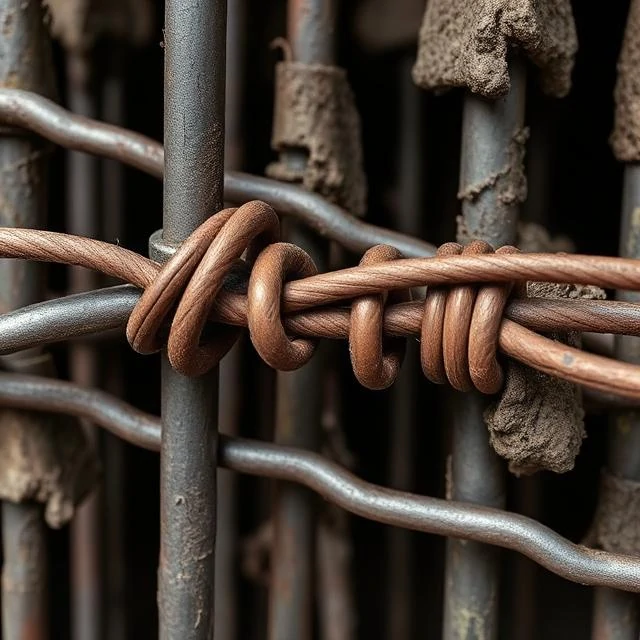
Concrete is strong in compression but weak in tension. Rebar, or reinforcing bar, solves that. It is a steel bar embedded in concrete to carry the tensile forces. The concrete protects the steel from corrosion and fire. The steel carries the tension that the concrete cannot. Together they form reinforced concrete, a material that can span, cantilever, and resist earthquakes. Rebar is the muscle of concrete.
Rebar comes in several grades and sizes. The size is designated by a number, from #3 (3/8 inch) to #18 (2 1/4 inches). The grade indicates the yield strength, usually 40, 60, or 75 ksi. The surface is deformed with ridges to grip the concrete. The bar is cut, bent, and tied with wire. It is placed according to the structural drawings. The cover, the distance from the bar to the surface, is specified to protect the steel. The lap length, where two bars overlap, is specified to transfer the force. The spacing and placement are critical. A misplaced bar can cause a failure.
Rebar must be inspected before the concrete is poured. The inspector checks the size, grade, spacing, cover, and ties. A missing bar or a bar in the wrong place can weaken the structure. Rebar can corrode if it is exposed to water and salt. That is why bridges and parking garages use epoxy-coated or stainless steel rebar. In some applications, fiber-reinforced polymer replaces steel. But steel rebar is still the standard. It is cheap, strong, and available. It is the hidden skeleton of every concrete structure.
Comments (3)
Leave a comment