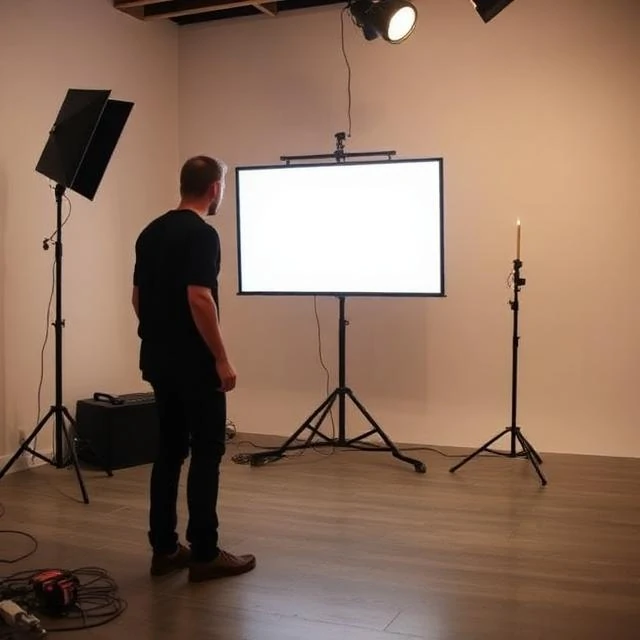
A character walks across a wooden floor. The footsteps are not the ones recorded on set. They are Foley. Foley is the reproduction of everyday sounds added in post-production. It is named after Jack Foley, a sound editor at Universal Studios who developed the technique in the 1920s. The sounds include footsteps, cloth rustling, doors opening, glasses clinking, and punches landing. They are recorded in a studio, in sync with the picture, by a Foley artist.
Foley is necessary because the sounds recorded on set are often unusable. The boom mic picks up dialogue, not footsteps. The set is noisy. The actor's shoes are wrong for the character. The director wants a specific sound that does not exist in the real world. Foley replaces the missing sounds and enhances the existing ones. It adds texture, realism, and emotional impact.
Foley artists work in a specially equipped studio, called a Foley stage. They watch the picture and perform the sounds in real time. They use a variety of props: shoes, cloth, glassware, doors, and gravel. They may walk on different surfaces to match the character's steps. They may crush a cabbage to simulate a punch. They may snap a carrot to simulate a bone breaking. The work is creative and physical. It requires timing, imagination, and a good ear.
Foley is one of the most invisible crafts in film. When it works, the audience does not notice it. They just believe the world. When it fails, the film feels hollow. Foley is the sound of reality in a constructed world.
Comments (3)
Leave a comment