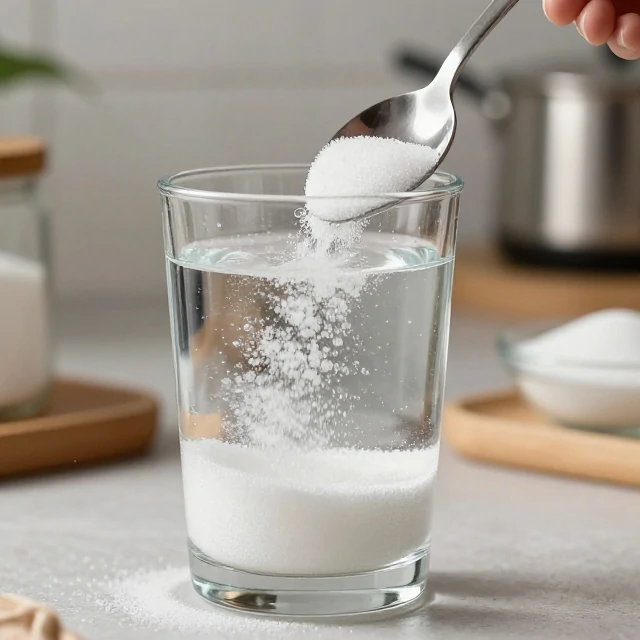
An unsaturated solution can still dissolve more solute at a given temperature. Add a spoonful of sugar to water and stir. It dissolves. Add another. It dissolves. The solution is unsaturated. Keep adding until sugar starts to accumulate on the bottom. Then the solution is saturated. It cannot hold any more at that temperature.
Solubility depends on temperature. Most solids dissolve better in hot water. Gases dissolve better in cold water. That is why a warm soda goes flat faster than a cold one. A saturated solution at one temperature becomes supersaturated when cooled. A supersaturated solution holds more solute than it should. Drop in a seed crystal and the excess solute crashes out.
Solution types
- Unsaturated: more solute can dissolve.
- Saturated: no more solute can dissolve.
- Supersaturated: more solute than saturation, unstable.
- Concentrated: high solute-to-solvent ratio.
- Dilute: low solute-to-solvent ratio.
Concentration and saturation are different. A concentrated solution can be unsaturated if the solubility is high. A dilute solution can be saturated if the solubility is low. Calcium sulfate is only slightly soluble. A teaspoon in a liter of water might saturate it. Sodium chloride is highly soluble. A cup in a liter might still be unsaturated. Saturation is a limit. Concentration is a measure. Confusing the two leads to errors in the lab. When a chemist says a solution is unsaturated, they mean it has not reached its limit. More solute will dissolve. That is all.
Comments
No comments yet. Be the first to share a thought.
Leave a comment