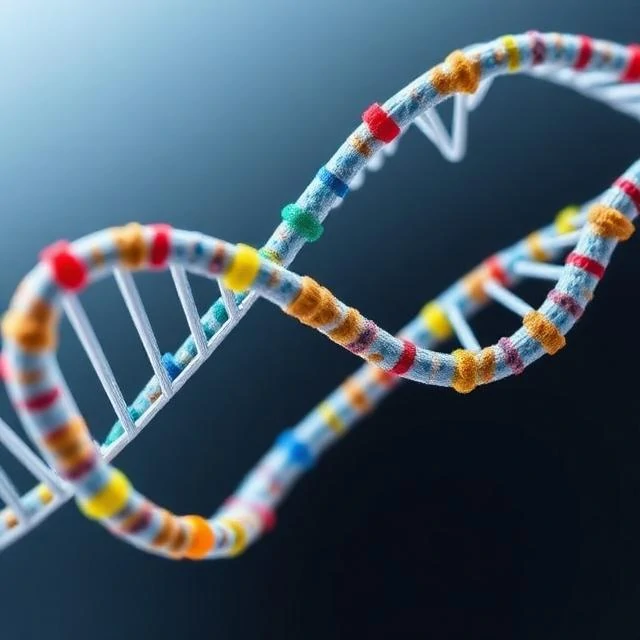
Your DNA is a set of instructions. It tells your cells how to build proteins, when to divide, and how to respond to signals. It is a double helix, two strands winding around each other, held together by pairs of bases: adenine with thymine, guanine with cytosine. The sequence of those bases encodes the information. The human genome contains about three billion base pairs.
DNA is packaged into chromosomes. Humans have 23 pairs, one set from each parent. Genes are segments of DNA that encode proteins or functional RNA molecules. Between genes are regulatory regions that control when and where genes are expressed. The genome is not just a list of genes. It is a complex regulatory network.
DNA is copied when cells divide, and errors in copying can cause mutations. Some mutations are harmless. Others cause disease. Some are inherited. Others arise during life, from radiation, chemicals, or random errors. The accumulation of mutations over time contributes to aging and cancer.
DNA is also a tool. Sequencing it can diagnose disease, identify individuals, and trace ancestry. Editing it can correct mutations. Synthesizing it can create new genes. The molecule of heredity has become the molecule of engineering.
Comments
No comments yet. Be the first to share a thought.
Leave a comment