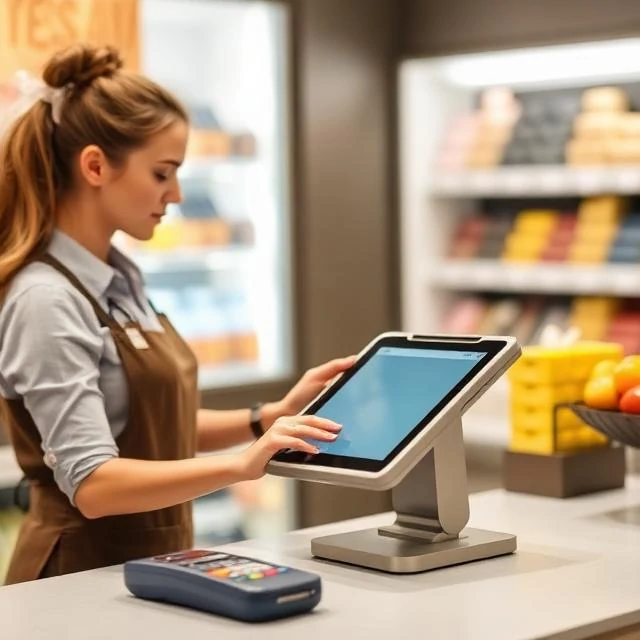
The point of sale is where a retail transaction happens. It can be a cash register, a card terminal, a tablet, or a self-checkout kiosk. It is where the customer pays and the merchant records the sale. The term covers both the physical location and the system that processes the transaction.
POS systems have evolved. The mechanical cash register, invented in 1879, dominated for a century. Electronic registers with barcode scanners arrived in the 1970s. Modern POS systems are software platforms running on tablets or cloud-connected terminals. They handle payments, inventory, customer loyalty, and reporting. Square, Toast, and Shopify POS are popular with small businesses. Large retailers use customized systems from NCR, Oracle, and SAP.
The payment side matters. A POS terminal must accept cards, contactless payments, and mobile wallets. It must comply with PCI DSS standards. It must connect to a payment gateway or processor. Downtime is costly. If the POS system goes down, the store cannot sell. That is why many merchants keep a backup terminal or a manual imprinter.
POS data is valuable. It tells merchants what sells, when, and to whom. It feeds inventory systems and loyalty programs. It also feeds fraud detection. A sudden spike in transactions at an unusual hour can signal a problem. The point of sale is not just a checkout. It is a data source.
Comments (4)
Leave a comment