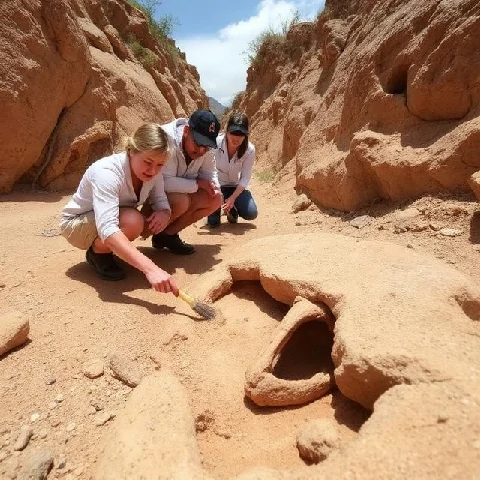
Paleoanthropology is the study of ancient human ancestors through fossils and artifacts. It combines methods from physical anthropology, archaeology, geology, and genetics. Researchers search for fossil-bearing sediments in places like the East African Rift Valley, the caves of South Africa, and the Atapuerca hills in Spain. A single tooth or fragment of jaw can take years to place in context. Dating is often as hard as finding the fossil itself.
The field has been transformed by genetics. Ancient DNA extracted from bones and teeth now allows researchers to trace migrations, interbreeding, and population splits. In 2010, the Neanderthal genome was sequenced, revealing interbreeding with modern humans. Since then, DNA from Denisovans and other archaic groups has rewritten the family tree. Discoveries rarely settle debates. They usually start new ones.
Core methods
- Survey and excavation of fossil sites.
- Radiometric dating of volcanic layers and sediments.
- Comparative anatomy of bones and teeth.
- Ancient DNA and isotope analysis.
Paleoanthropology is a slow science. A career may hinge on one lucky find, and that find may take decades to interpret.
Comments
No comments yet. Be the first to share a thought.
Leave a comment