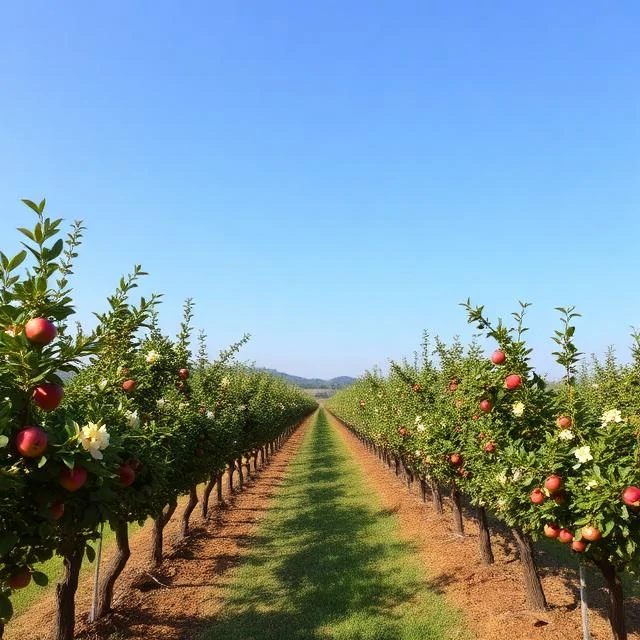
An orchard is a plantation of fruit or nut trees managed for commercial harvest. Apples, pears, cherries, peaches, plums, oranges, olives, almonds, and pecans are all grown this way. Some orchards are centuries old; others are replanted every 15 to 25 years as varieties and rootstocks change.
Modern orchards look different from their ancestors. Dwarf and semi-dwarf rootstocks keep trees small enough to pick from the ground or a short ladder. Dense plantings, trellises, and two-dimensional canopy systems increase yield per hectare. Netting protects against hail and birds. Drip irrigation lines run along the rows.
The orchard year
- Winter pruning to shape trees and remove disease
- Spring bloom, pollination, and frost protection
- Summer thinning, irrigation, and pest scouting
- Autumn harvest, often with multiple pickings per tree
Orchards are long-term investments. A wrong variety choice or a missed disease problem can cost a grower years. That is why so much of the work is preventive rather than reactive.
Comments
No comments yet. Be the first to share a thought.
Leave a comment