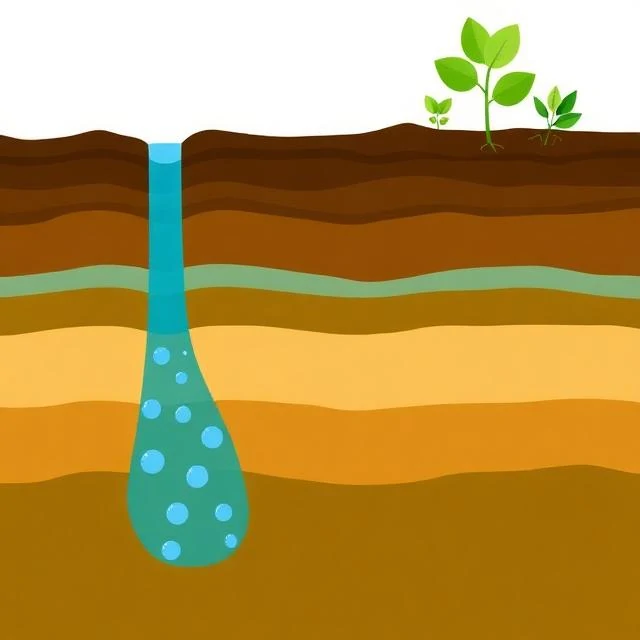
Leaching is the downward movement of dissolved materials through soil, carried by water. When rain or irrigation exceeds what the soil can hold, the excess drains deeper, taking soluble nutrients and salts with it.
Nitrogen is the biggest concern in most farming systems. Nitrate is highly soluble and does not cling to soil particles, so it moves easily below the root zone. Once it reaches groundwater or drains into streams, it becomes a pollutant rather than a nutrient. Phosphorus moves less readily but attaches to eroded soil particles and can still reach waterways. Potassium, sulphur, and micronutrients such as boron also leach under the right conditions.
Managing the loss
- Split fertiliser applications to match crop uptake
- Use cover crops that scavenge residual nitrogen
- Match irrigation to soil moisture, not the calendar
- Keep soil covered to slow water movement
Some leaching is unavoidable, especially in sandy soils and wet climates. The goal is not zero loss but keeping the loss within what the crop can tolerate without wasting money or damaging water downstream.
Comments
No comments yet. Be the first to share a thought.
Leave a comment