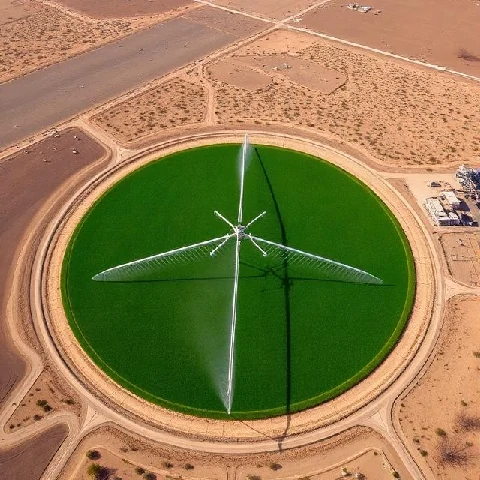
Irrigation is the artificial supply of water to crops, used wherever rainfall is too little, too unreliable, or mistimed. It is what allows farming in the Nile Valley, the Punjab, the Central Valley of California, and the dry plains of northern China.
Methods range from the ancient to the precise. Flood irrigation spreads water across a field and lets it soak in. Furrow irrigation sends it down trenches between rows. Sprinklers imitate rain, and drip lines deliver water directly to the root zone, drop by drop. Centre-pivot systems roll across large fields in a slow circle. Each has a different cost, efficiency, and fit.
The big questions
- Source: rivers, reservoirs, aquifers, or recycled water
- Delivery: gravity, pumps, or pressurised pipes
- Scheduling: when and how much, based on soil and crop stage
- Drainage: where the excess goes, and whether salt accumulates
Water tables are falling under many of the world's most productive regions. The push now is toward drip, soil moisture sensors, and deficit irrigation, which applies just enough water to hit yield targets without waste.
Comments
No comments yet. Be the first to share a thought.
Leave a comment