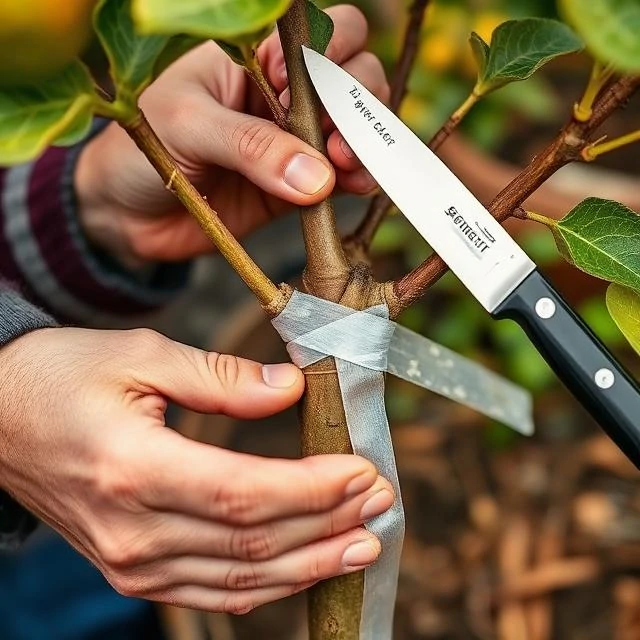
Grafting joins two plants so they grow as one. The top part, the scion, supplies the shoots and fruit. The bottom, the rootstock, supplies roots and often brings disease resistance, cold hardiness, or size control.
The trick is to line up the cambium, the thin layer of dividing cells just under the bark, and hold the two pieces together until they knit. Growers have been doing this for thousands of years. Chinese and Greek writers described it long before the Roman agronomists refined the methods.
Common techniques
- Whip-and-tongue: matching diagonal cuts that interlock
- Cleft: a scion wedged into a split stump
- Side: a scion inserted into the side of a rootstock
- Budding: a single bud slipped under the bark
Apples, pears, cherries, roses, and grapevines are almost always grafted. The rootstock might be chosen to keep a tree small for easy picking, or to survive soil-borne pests that would kill the scion on its own roots.
Comments (3)
Leave a comment