Land capable of being plowed and used to grow crops.
🟫
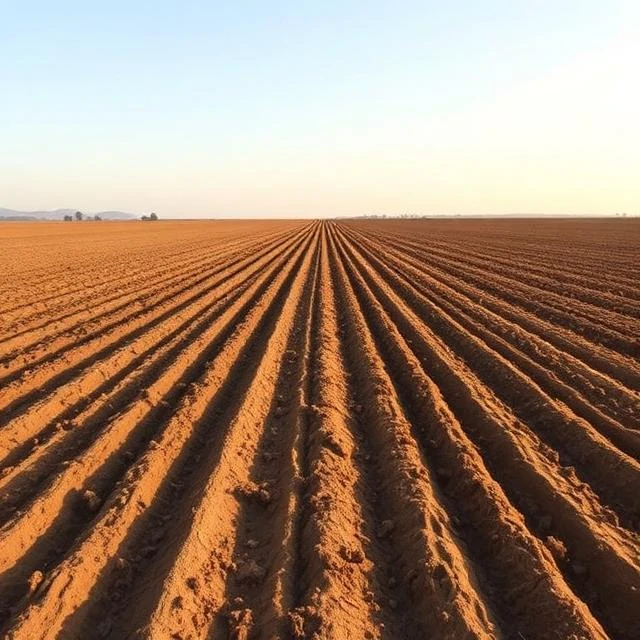
Arable land is land capable of being ploughed and used to grow crops, typically under annual cultivation. The term derives from the Latin arabilis, meaning 'fit for ploughing.' In the FAO's land-use classification, arable land includes land under temporary crops, temporary meadows for mowing or pasture, land under market or kitchen gardens, and land temporarily fallow; it excludes land under permanent crops such as orchards and vineyards, and permanent pasture. Globally, arable land covers roughly 1.4 billion hectares, or about 11 percent of the Earth's land surface, with the largest areas in the United States, India, Russia, China, and Brazil. Arable land per capita has declined steadily as populations have grown and soils have degraded through erosion, salinisation, urbanisation, and desertification. Sustainable management includes crop rotation, no-till farming, cover cropping, and organic amendments to preserve soil structure and fertility. Protecting arable land is central to food security, and many countries have zoning laws or land banks to limit conversion to non-agricultural uses.
Comments
No comments yet. Be the first to share a thought.
Leave a comment