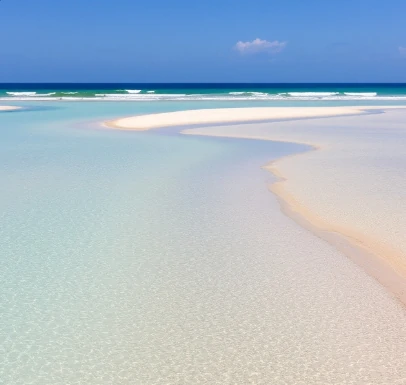
A lagoon is a shallow body of water separated from the open sea by a barrier island, sand spit, or coral reef. Water exchange with the ocean occurs through inlets or over the reef crest, so salinity and temperature can differ markedly from offshore conditions.
Coastal lagoons often support seagrass beds, mangrove fringes, and productive fisheries. They serve as nurseries for many marine species and as buffers that absorb wave energy and filter land-derived nutrients and sediments. Human settlements frequently develop around lagoons because of their sheltered waters and access to both land and sea resources.
Lagoons are sensitive to changes in freshwater inflow, inlet stability, and sea-level rise. Pollution and eutrophication can degrade water quality rapidly because of limited flushing. Management typically focuses on maintaining connectivity with the sea, controlling nutrient inputs, and protecting fringing habitats. Each lagoon has a unique balance of marine and terrestrial influences.
At low tide a lagoon can look like a quiet lake; at high tide the ocean reasserts its connection.
Comments
No comments yet. Be the first to share a thought.
Leave a comment