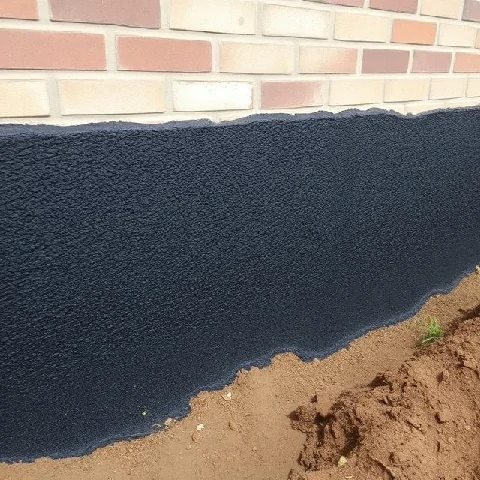
Water is the enemy of buildings. It rots wood, corrodes metal, and grows mold. Damp proofing prevents moisture from entering a building. It is different from waterproofing, which resists liquid water under pressure. Damp proofing resists capillary action, the movement of water through porous materials like concrete and masonry. It is used on foundation walls, floors, and crawl spaces. It is a barrier, not a drain.
Damp proofing materials include bitumen coatings, plastic sheets, and cementitious coatings. A damp proof course, or DPC, is a layer of impervious material built into a wall to stop rising damp. It is usually placed near the base of the wall, above grade. A damp proof membrane, or DPM, is a sheet under a concrete slab to stop moisture from wicking up. These barriers must be continuous. A gap or a tear lets moisture through.
Damp proofing is not a substitute for drainage. If the ground around a foundation is saturated, hydrostatic pressure will push water through the wall. That is why foundations also need drain tiles, gravel, and grading that slopes away from the building. Damp proofing handles the moisture that would otherwise migrate through the material. It is a small part of a larger water management system. Without it, the basement smells musty, the walls stain, and the structure deteriorates. It is invisible work. It is essential.
Comments (3)
Leave a comment