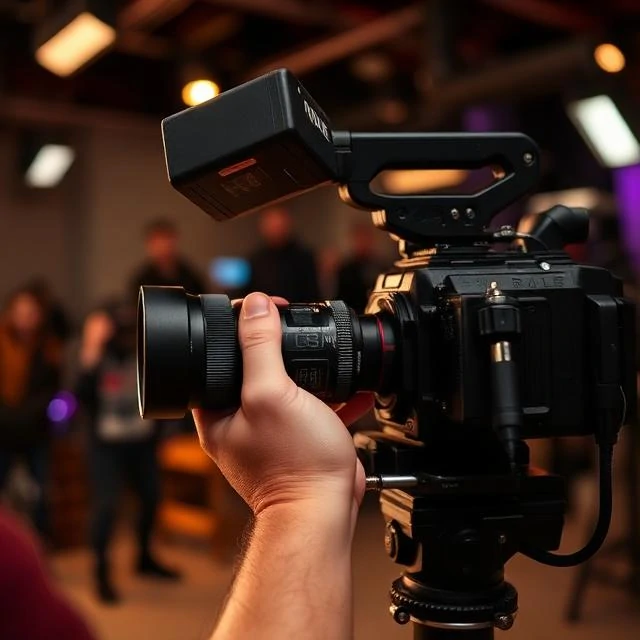
A handheld shot is one where the camera operator holds the camera without stabilization. The camera moves with the operator's body, creating a shaky, immediate, and spontaneous feel. It is the opposite of a locked-down tripod shot or a smooth dolly shot. Handheld camera work is used in documentaries, news, and fiction films. It can create urgency, realism, and chaos. It can also be nauseating if overused.
Handheld camera work became prominent in the 1960s with the French New Wave and cinema verité. Directors like Jean-Luc Godard and D.A. Pennebaker used handheld cameras to capture spontaneous moments and a sense of immediacy. In the 1990s, the Danish Dogme 95 movement embraced handheld cameras as part of its rules. In the 2000s, the found footage horror genre, like The Blair Witch Project and Cloverfield, used handheld cameras to create a sense of realism and dread. The technique has become a standard tool in action films, where it creates a sense of kinetic energy.
Handheld camera work is not easy. It requires a steady hand, a strong back, and an understanding of how movement affects the image. A handheld shot can be subtle, with small movements that mimic breathing. Or it can be aggressive, with violent shakes that disorient the audience. The operator must control the movement to serve the story. A shaky camera is not always better. Sometimes a stable shot is more powerful. The choice depends on the scene and the intention.
Comments
No comments yet. Be the first to share a thought.
Leave a comment