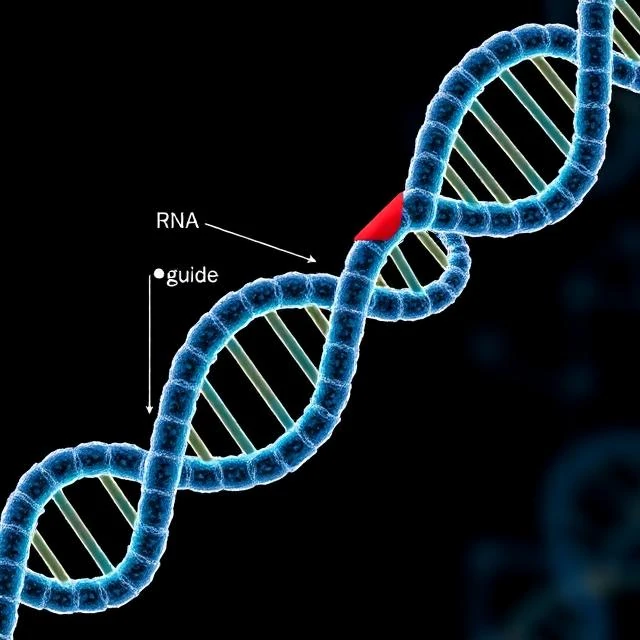
Bacteria have an immune system. They store fragments of viral DNA in a region called CRISPR and use them to recognize and cut invading viruses. In 2012, Jennifer Doudna and Emmanuelle Charpentier showed that this system could be reprogrammed to cut any DNA sequence. CRISPR became a gene-editing tool. The discovery won the Nobel Prize in Chemistry in 2020.
The system has two components. A guide RNA matches the target DNA sequence. The Cas9 enzyme cuts the DNA at that site. The cell then repairs the break, either by disrupting the gene or by inserting a new sequence. Other Cas enzymes, like Cas12 and Cas13, target different types of nucleic acids. Base editors and prime editors can make changes without cutting both strands.
CRISPR has transformed research. It lets scientists knock out genes, insert mutations, and screen entire genomes for function. It is used to create disease models, improve crops, and develop new therapies. In 2023, the first CRISPR-based therapy, Casgevy, was approved for sickle cell disease and beta thalassemia. It edits a patient's own blood stem cells to produce fetal hemoglobin.
CRISPR is powerful and imperfect. Off-target edits can occur. Ethical questions about editing human embryos remain unresolved. The tool is cheap, easy to use, and spreading fast. The regulations are not.
Comments
No comments yet. Be the first to share a thought.
Leave a comment